This Training & Workforce Development Pilot is a live partnership between Carnarvon Common Ground (CCG) and Community Skills WA (CSWA), with CSWA funded by Lotterywest to design and trial a locally relevant training model in Carnarvon. The work is focused on strengthening the capability of the existing youth and wellbeing workforce, while also creating practical training pathways into employment for local people. It is an exciting opportunity to grow a stronger local workforce from within community, rather than relying only on skills brought in from elsewhere.
Why this project is needed
Across Carnarvon, many of the people supporting young people and families are carrying complex work in mental health, wellbeing, mentoring and crisis response, often without easy access to accredited, place‑based training that matches the realities of regional practice. Community Skills WA has identified a clear need for training that is accredited, achievable and able to create pathways into formal qualifications, especially in regional areas where many workers have strong lived experience or community credibility but limited access to youth‑specific training.
At the same time, Carnarvon Common Ground is working to build a community‑led system of support around young people that is more trauma‑informed, culturally grounded and sustainable over time. That means strengthening the current workforce, but also opening real employment and training opportunities for local people who want to work in youth, mentoring and wellbeing roles in the future.
What this project is about
This pilot is about designing a local training model that can do two things at once – upskill the people already doing the work and create entry points for local people into future jobs and qualifications.
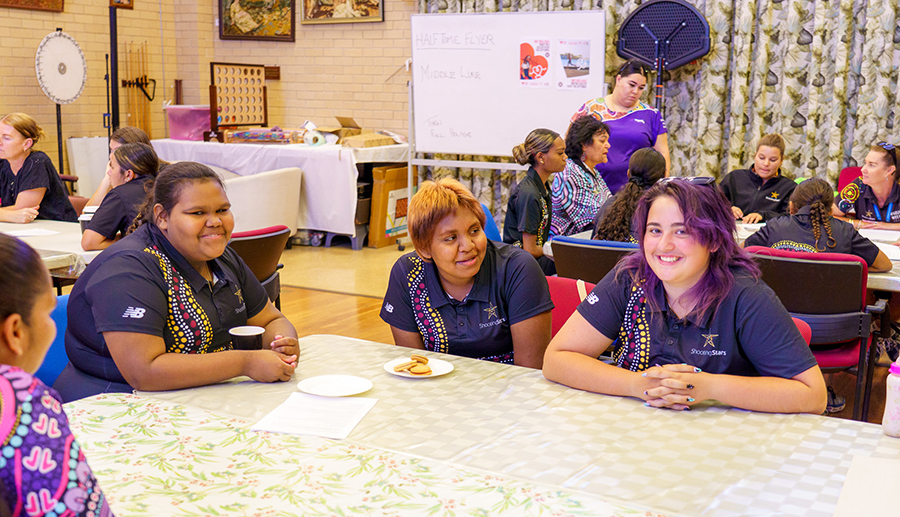
Community Skills WA recently visited Carnarvon to meet with local service providers working with youth, particularly in the mental wellbeing space. The visit confirmed strong interest in the pilot and highlighted a range of opportunities to shape training around what local services actually need first – both for workforce strengthening and for future employment pathways.
The project aligns strongly with CSWA’s broader aim to develop youth mentoring and mental health skill sets that support youth services, build workforce capacity in regional communities, and create credit pathways toward formal qualifications such as Certificate IV in Youth Work and other community services qualifications.
Why the pilot matters
What makes this pilot especially important is that it is not just about sending people to existing courses. It is about building a localised training and workforce development model that works in Carnarvon, for Carnarvon.
CSWA recognise that regional communities need place‑based delivery, scaffolded learning, and training that is achievable for people with different levels of experience. They also emphasises the importance of developing local delivery and assessor capacity so that training can be delivered in a sustainable and culturally appropriate way over time.
For CCG, that opens the door to something bigger than a single round of training. It creates the possibility of a long‑term training pipeline that helps local people move from lived experience and community leadership into accredited learning, practical mentoring roles, and formal employment across the youth and wellbeing space.
Building local trainers
One of the most exciting opportunities identified through this partnership is the potential to support local community members to complete the nationally recognised Certificate IV in Training and Assessment (TAE), which equips trainers and assessors in the VET sector to design, deliver and assess accredited training – enabling our own people to train and assess locally in ways that fit our community.
This shifts the model from training being something that is flown in from outside, to training being something that can increasingly be delivered by our own people, grounded in local relationships, cultural understanding and regional experience. Over time, this could significantly expand both training access and employment opportunities in Carnarvon.
How the pilot is being shaped
The pilot is live now. Funding is already in place for the youth mentoring component, and the partnership is currently in the design phase – working through what the pilot will look like on the ground and where training should be focused first.
That design work is being informed by:
- direct conversations with local services working with young people and their mental wellbeing
- a shared focus on the skills most needed in youth‑facing roles now
- mapping those skills to accredited units and skill sets that can be delivered locally and credited into further qualifications.
Areas already highlighted in the broader CSWA concept include skills connected to youth engagement, mental health literacy, trauma‑informed practice, suicide risk and safety, cultural safety, communication, and working effectively with young people and families across different service settings.
Alignment with bigger reform
This pilot also sits within a much bigger opportunity. CSWA’s model is designed to connect local consultation and workforce need with accredited training, funding pathways and state‑level recognition of new skill sets. The project paper specifically refers to developing the documentation needed to work with the Department of Training and Workforce Development (DTWD) to establish state‑based skill sets and secure access to funding.
That creates a strong alignment with the broader goals of the National Skills Agreement – particularly around national closing the gap targets, place‑based responses, regional workforce development, access to training for priority groups, and stronger links between community need and the training system.
In a regional setting like Carnarvon, this matters. It creates the potential for training and workforce investment to be shaped by local goals rather than generic metropolitan models, and it opens the door to a more practical partnership with DTWD around what skills, pathways and delivery methods make sense in the Gascoyne context.